La Sauceda Biocultural Festival this Weekend in Hermosillo

Biocultural Festival in La Sauceda Celebrates One Year of Culture, Nature, and Community

Hermosillo is set to celebrate one of its most meaningful community spaces. From March 20–22, 2026, the Biocultural Festival at La Sauceda will mark the first anniversary of the Bosque Urbano La Sauceda, a once-abandoned park that has been transformed into a vibrant hub for culture, education, and environmental connection.

With more than 60 free activities, the festival invites families, visitors, and residents to experience a unique blend of nature, art, science, and community life.

Event Details

Dates: March 20–22, 2026

Location: Bosque Urbano La Sauceda, Hermosillo

Admission: Free

Workshop registration: Available online.

A Park Reborn

La Sauceda has quickly become a symbol of urban renewal in Sonora with $526+ million pesos invested in rehabilitation, 11,000 trees planted through reforestation efforts, and new infrastructure for recreation, services, and accessibility. And it had more than 500,000 visitors in its first year.

Plans include a botanical garden, environmental laboratory, and the restoration of the iconic “La Burbuja” interactive museum.

Culture Meets Nature

A major highlight of this year’s celebration is the opening of a Fondo de Cultura Económica bookstore, which will include a café and serve as a cultural gathering space.

The launch will feature a visit from renowned Mexican author Paco Ignacio Taibo II, reinforcing the festival’s strong cultural focus.

Festival Highlights

Friday, March 20

The festival will open with concerts that feature local artists and jazz musicians. There will be a guided tour of the park, “Paisaje que se habita”, talks on territory, culture, and nature, and an evening astronomy session and night sky observation.

Saturday, March 21

Saturday will start with early morning birdwatching, and throughout the day there will be workshops on agroecology, succulents, and native plants, ceramics, storytelling, and traditional medicine workshops, and an environmental education conference.

In addition, there will be children’s activities, theater, and storytelling, a cultural and environmental bazaar, live mural painting, and a Down Syndrome Awareness Day runway event.

Spring Equinox Symphony Concert

Sunday, March 22

Sunday’s activities will include guided hikes and Cerro de la Campana tour, botanical printing, origami, and medicinal garden workshops, family and youth activities, poetry readings and editorial presentations, and the Hermosillo Half Marathon.

Picnic-style concerts featuring rock, funk, and fusion will close the event

Why It Matters

The Biocultural Festival is more than an event. It represents a broader vision of public space as a shared cultural and environmental asset. La Sauceda stands as a model for how cities can reclaim neglected areas and transform them into thriving centers of community life.

Hacienda de los Santos Resort - Alamos, Sonora, Mexico
Durable Medical Equipment Ad

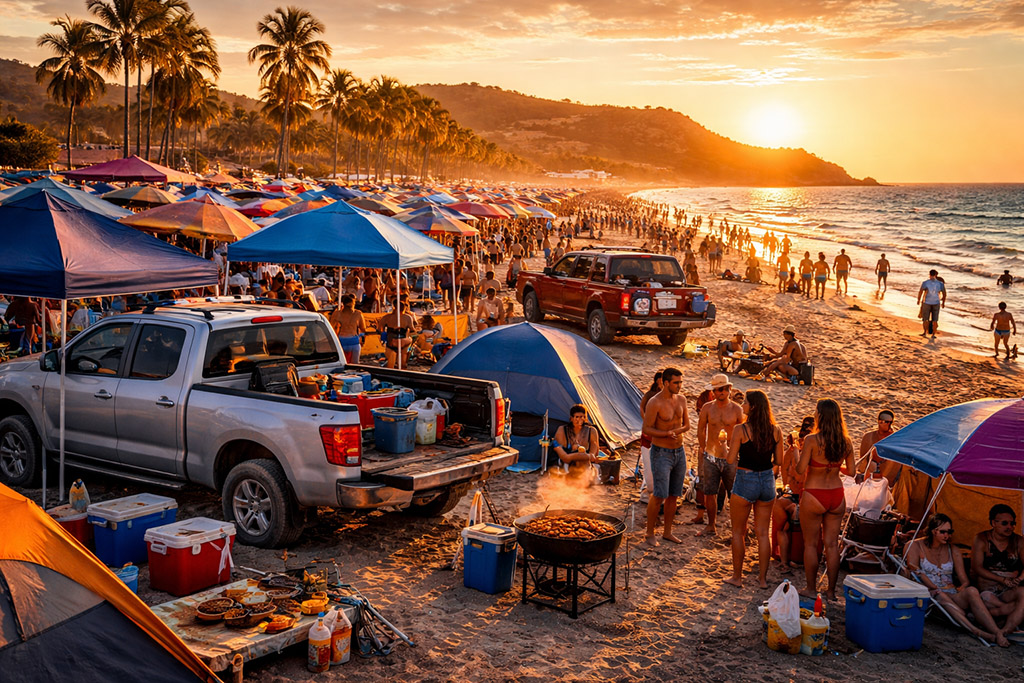
More than 100,000 Beach Visitors Anticipated for Semana Santa

Semana Santa Expected to Bring More Than 100,000 Visitors to Sonora’s Beaches

Sonora newspaper El Imparcial reports that Sonora’s most popular coastal destinations are preparing for a busy Semana Santa holiday period, with tourism officials expecting more than 100,000 visitors to travel to beaches across the state.

According to regional tourism officials, Puerto Peñasco, San Carlos, and Bahía de Kino are projected to welcome tens of thousands of travelers during the holiday period, generating an estimated 152.9 million pesos in economic activity for the region.

Puerto Peñasco (Rocky Point)

In Puerto Peñasco, also known as Rocky Point, tourism officials expect around 55,000 visitors between April 2 and April 5. Hotel occupancy is projected to reach approximately 60 percent, generating an estimated 70 million pesos in tourism spending.

Local officials say visitor numbers could be slightly lower than last year due to factors such as border crossing delays at Lukeville, Arizona, and broader security concerns. However, tourism leaders remain optimistic that travel demand could still match or exceed last year’s figures.

San Carlos and Guaymas

Further south along the Sea of Cortez, the beach community of San Carlos near Guaymas is preparing to receive about 30,000 visitors during Semana Santa.

Hotel occupancy typically rises throughout the holiday weekend, increasing from 40% on Holy Thursday to 90% on Holy Saturday.

Tourism officials expect hotel occupancy to increase slightly compared with last year as promotion of the destination continues.

Kino Bay

Meanwhile, Kino Bay, the beach town west of Hermosillo, is expected to see full hotel occupancy from Thursday through Sunday.

Tourism officials estimate the destination will generate approximately 13.6 million pesos in daily economic activity during the holiday period.

About 95% of visitors to Bahía de Kino come from within Sonora, and most travel from nearby Hermosillo for a short beach getaway.

A Major Travel Season in Sonora

Semana Santa is traditionally one of the busiest tourism periods of the year in Sonora, as families travel to coastal destinations along the Sea of Cortez to enjoy warm weather, beaches, and holiday festivities.

With strong visitor numbers expected in Puerto Peñasco, San Carlos, and Bahía de Kino, the region’s tourism sector is preparing for another lively start to the spring travel season.

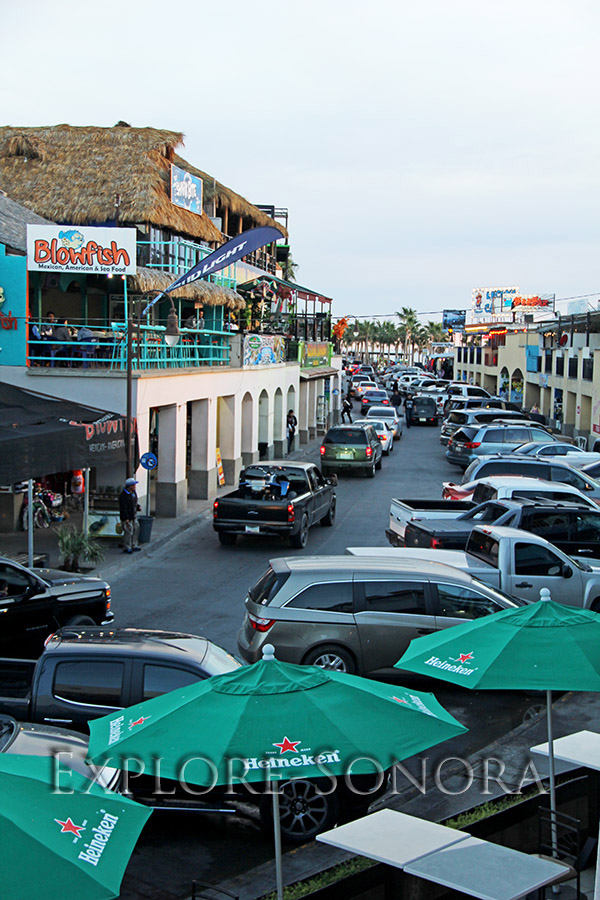
Cruising the Malecon in Old Port Rocky Point, Sonora
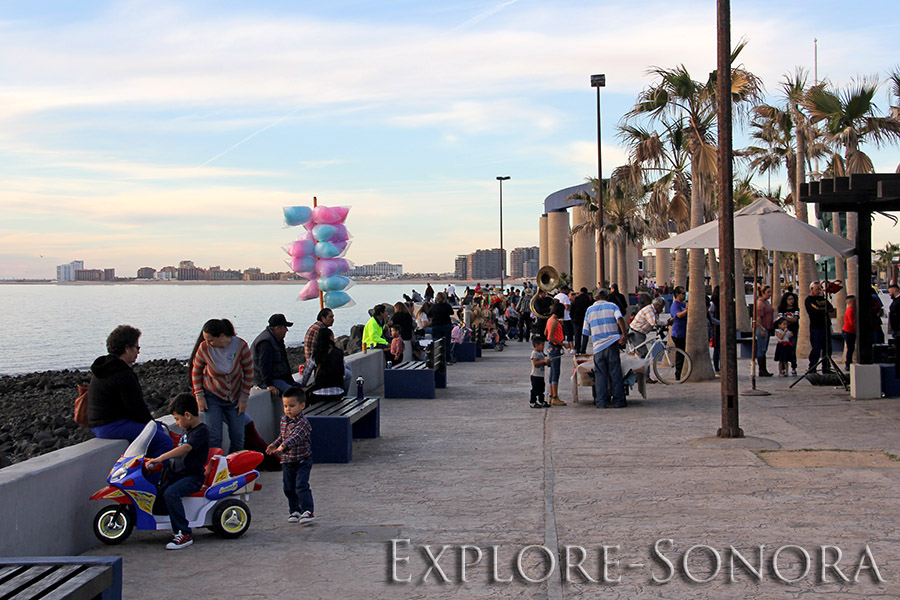
Along the Malecon in Rocky Point, Puerto Penasco Sonora
Santisima Virgen de Guadalupe

Arizona family robbed at gunpoint during Sonora beach vacation

Puerto Lobos, Sonora

Lessons to be learned regarding travel in Sonora, Mexico

A family of four from Mesa, Arizona traveling to their Sonora, Mexico beach house were forced to pull over at gunpoint as they traveled south of Puerto Peñasco, Sonora (also known as Rocky Point). The assailant then stole their pickup truck, luggage, ATVs and other possessions. The auto, which they had paid off just two months earlier, and possessions were not insured in Mexico, and the family estimated it to be a $70,000 loss.

According to published reports, Mason and Natalie Davis from Mesa were driving to their Puerto Lobos beach house with their two daughters last Tuesday evening, October 6. At approximately 6:00 p.m. they had just passed through Puerto Peñasco and were driving south to their beach house in Puerto Lobos, Sonora when a grey sedan pulled alongside their white 2017 Toyota Tundra pickup truck.

A man in the sedan pointed an AK-47 assault rifle at Mason Davis and indicated for him to stop the vehicle. After Davis had pulled over, one of the assailants climbed into the vehicle’s driver’s seat while Natalie and the two girls were still inside. They jumped out of the pickup just before it sped away with the passenger doors still open. The pickup was towing a 20-foot tandem axle trailer loaded with three quad ATVs, luggage, a bicycle and other family possessions, which may have been the targets of the carjacking.

The Davis family was left stranded at the side of the road until a bus that transports mine employees stopped to give them a ride to a nearby military post, and they returned home the following day.

Pickup recovered without trailer

The Toyota Tundra was recovered by Sonora state police three days later in the town of San Felipe, located in the municipality (similar to a county in the U.S.) of Caborca.

Important lessons for those considering travel to Sonora, Mexico

Purchase vehicle and travel insurance

Many frequent visitors to Sonora feel so safe and confident in their travels that they do not purchase Mexico auto insurance or travel insurance before crossing the border into Mexico. The Davis family, who had traveled to their Puerto Lobos beach house for 20 years, apparently had this faulty sense of safety and confidence.

As a result, they paid dearly for the oversight. And given the current high level of violence in Sonora, they are fortunate to be alive.

Do your research

Before crossing the border, make an informed decision on whether you should travel to Sonora, or any other part of Mexico. The state does not perform comprehensive coronavirus testing, as indicated by their positivity rate of 45%, and they are beginning to experience a second wave of the virus.

Puerto Lobos was the scene of a cartel battle in June that left 12 dead. The municipality of Caborca and other Sonoran municipalities are currently under siege as local cartels battle with out-of-state criminal organizations, as evidenced by news reports of armed conflicts in the region spurred by Caborca turf wars and other news reports.

Also, the U.S. Department of State publishes travel warnings regarding Sonora, but in this case their advice was not only useless, but potentially dangerous.

Previously the State Department had allowed government employees to travel to Puerto Peñasco by entering Mexico at Nogales and driving from Santa Ana to Rocky Point via Mexico highway 2, which passes through Caborca. When Caborca heated up earlier this year they removed mention of that route but did not mention why (they did not even mention that it had been removed) or add any travel advisories.

If the State Department had acknowledged the danger of traveling in Caborca, and in particular travel to the coast of Caborca, the Mason family may have decided not to take the trip; or at least they may have taken more precautions.

Basically, the only relatively safe places to visit in Sonora include day trips to border towns and the route from the Lukeville-Sonoyta border crossing to Puerto Peñasco.

Follow common precautions

Sonora is more dangerous now than it has been in years, so these basic, common sense precautions are more important than ever.

Avoid conspicuous signs of wealth. This not only applies to wearing expensive jewelry while shopping, but driving late-model pickups and towing expensive and highly desired vehicles.

Travel in groups. When possible, travel with others for extra security.

Be aware of your surroundings. Frequent visitors to Mexico may be lulled into a sense of false confidence and not notice signs of danger.

Travel during daylight hours. When traveling in Sonora, always travel during the daylight hours. Again, familiarity with Sonora and a false sense of confidence may have been the reasons why the family chose to travel at dusk and into the evening hours.

Make good decisions, and be safe

Sonora’s economy has been hit hard by the coronavirus. Combine that with a lack of economic support from government, and the result is that many Sonorans are suffering from health and economic distress. Know that if you flout your wealth in that environment, you may just end up being robbed. Or worse.

Be safe.

Arizona-Sonora website

US-Sonora border closed for “nonessential travel”

Early closure notice results in rush of holiday weekend visitors 


On Wednesday, July 1, in order to try to stem the rapid growth of coronavirus cases in her state, Sonora Governor Claudia Pavlovich announced that the border between Arizona and Sonora would be closed to non-essential (leisure) travel at three major border crossings, starting on the 4th of July weekend.

The operation, conducted in coordination with Mexico’s National Institute of Migration (INM), would place officials south of border crossings in Agua Prieta, Nogales and San Luis Rio Colorado. The Lukeville-Sonoyta border crossing would remain open to allow tourists to visit the coastal city of Puerto Peñasco, also known as Rocky Point.

Essential activities

The closure defined “essential” travel in the same way as U.S. border closures have, with the exception of being able to cross the border for education-related activities, which is not allowed.

Essential activities for travelers who want to visit Sonora include crossing the border for medical and dental services, to purchase medication and for legitimate business purposes.

Crossing the border for leisure activities is not permitted.

Rush to the border

As soon as the closure was announced, Arizonans packed their weekend bags and rushed the border to get into Sonora before the ban began.

But at the Lukeville border crossing, citizens and local police in Sonoyta essentially blocked southbound traffic on Friday. They stopped foreign vehicles and turned them around, not allowing traffic to proceed to Rocky Point. The blockade was disbanded before the weekend stream of traffic to Puerto Peñasco.

Lax enforcement?

On Friday, El Imparcial reporter Rubén A. Ruiz watched a checkpoint between Adolfo López Mateos Avenue and Campillo Street in Nogales. Operated by state police assisted by the Nogales Civil Protection Unit (UPC), in a two-hour period on Friday morning they turned back 12 vehicles from the U.S

But starting at noon, they began to allow all vehicles to pass and continued to do so for the time that reporters watched the checkpoint.

Current border closures

Currently, the border crossings at Douglas-Agua Prieta, Nogales and San Luis Colorado are closed to southbound non-essential traffic.

The Lukeville-Sonoyta border crossing should be open. However, due to conflicts between the municipalities of Sonoyta and Puerto Peñasco, there may be intermittent closures that prevent southbound traffic from the U.S.

Arizona-Sonora website

Woman with COVID-19 symptoms dies on Sonora passenger bus

Boarded the bus on Saturday; died on Sunday night 


A 28-year-old woman traveling with her family on a commercial bus was unresponsive at approximately 11:00 p.m. on Sunday night when the bus reached at the Querobabi military checkpoint south of Santa Ana, Sonora.

When her mother tried to wake her, it became evident that she had passed away. 

According to Sonora media reports, the woman had been traveling with symptoms of COVID-19. She her family had boarded the bus on July 4 in Cuautla, Morelos and were passing through Sonora en route to their home in San Quintin, Baja California. 

It was not clear whether the woman was symptomatic when she boarded the bus for her journey home. 

Bus stations in Mexico typically check the temperature of passengers as they board. However, it is possible that this screening was not available in Cuautla, due to the time of boarding or lack of equipment. 

It is not clear whether contact tracing was done, or will be done, for other passengers who may have been exposed to the novel coronavirus as they shared a bus with the woman. 

Tourist advisory

We do not recommend bus travel in Mexico at this time. It has become apparent that people infected with the coronavirus may cause buses to become a congregate setting for the rapid transmission of the virus.

And if you do not feel well, or have flu-like symptoms, do not go out in public and especially avoid indoor congregate settings. Stay home.