Sonora Travel Warning: Coronavirus Pandemic
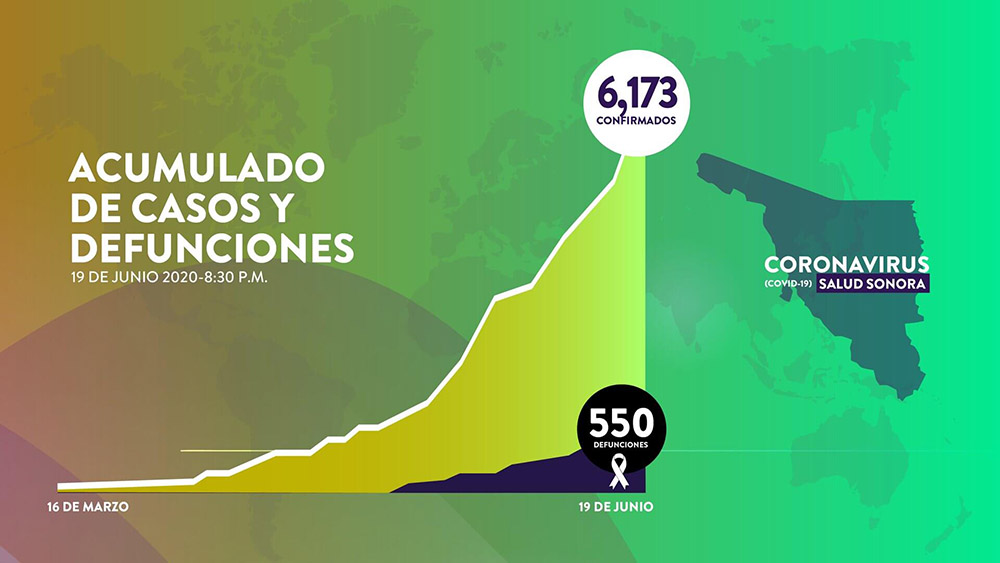
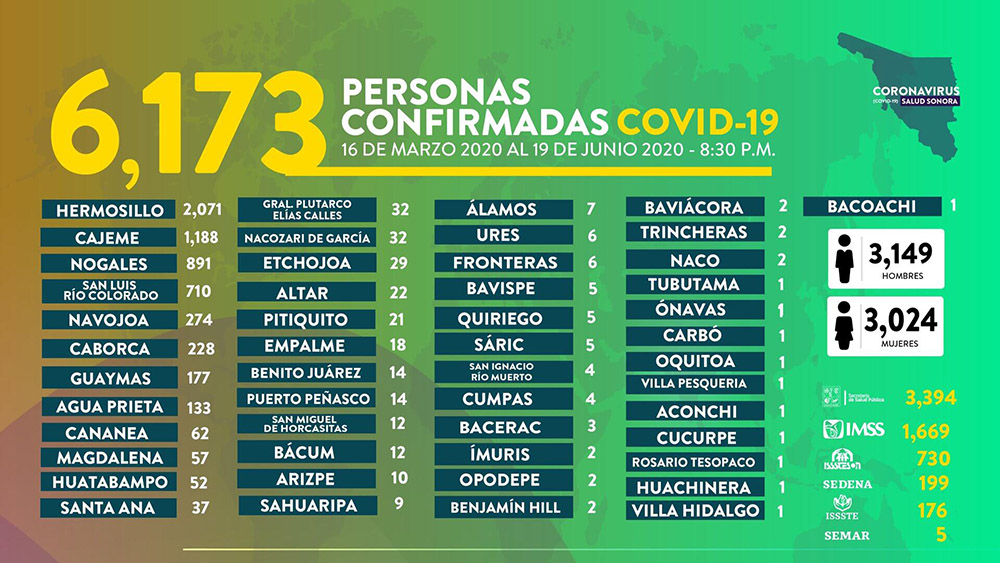
The novel coronavirus has spread through the state of Sonora, with outbreaks in Sonora’s major cities and municipalities. Travel to Sonora is not recommended at this time, with the possible exception of brief visits across the border. Read more.
Increased Crime in Sonora
Despite coronavirus travel restrictions, the number of homicides and other violent crimes have continued to grow in Sonora in 2020. This is especially true in the municipalities of Guaymas (including San Carlos), Empalme, Cajeme (Ciudad Obregon) and Hermosillo.
Everything changed in 2019
Travelers to Sonora, Mexico have always been aware of inherent risks of traveling in a state where cartels control drug and human trafficking routes from the south of Mexico through Sonora to the United States.
Enjoying the state’s natural beauty whle perhaps having an uneasy recognition that killings and other bad things were happening all around, particularly at night, from a tourist perspective things seemed relatively calm.
And even though the U.S. State Department placed Sonora on a higher-risk list in 2018 asking tourists to reconsider travel to the state, foreigners were not targeted and tourism areas felt safe with no violent daytime incidents.
But all of that changed in 2019.
2019 in Sonora, Mexico
Crime steadily increased from April through the end of the year 2019 in Sonora, much of it focused in the municipalities of Guaymas, Empalme, Cajeme (Ciudad Obregon) and Hermosillo.
As the police and federal government armed forces response has evolved, more police officers and other public officials were murdered.
City officials from Guaymas, Agua Prieta and Benito Juárez were murdered.
And the situation has spilled over to 2020 as crime has exceeded 2019 records in Sonora, Mexico.
Increased violence
As violent crime began to increase in early 2019, two young men and their Uber driver died in a hail of gunfire as they were leaving San Carlos on Manlio Fabio Beltrones Rivera Boulevard.
In April, a shootout in the tourist city of San Carlos left a policeman dead. And Mexican Secretary of Security and Citizen Protection Alfonso Durazo Montaño announced that Hermosillo was next on the priority list for a deployment of federal National Guard troops.
Also in April, reports published by Hermosillo newspaper El Imparcial noted that Hermosillo ranks second nationally in the killings of women. And that 67 children had been killed in Sonoran “narco conflicts” since 2015.
As the summer weather heated up in Sonora, so did the violence in the state. Ten people were murdered in the state of Sonora on one day, Sunday, June 10, 2019. Four men and a woman were gunned down in the border city of Agua Prieta, and another four men died in a fusillade of gunfire in the nearby border town of Naco, Sonora. The tenth victim was murdered in Hermosillo. And that violence continued in June.
On June 6, gunmen entered the emergency room at a hospital in Guaymas to murder a man. It was the third time in five years that had happened.
Also in Guaymas, on June 20 the municipal comptroller of that municipality and another municipal employee were gunned down on the main Guaymas thoroughfare, Avenida Serdán. Just six months earlier, on October 4, 2018, five municipal police transit officers were murdered on that same street.
Violent crime exploded in Ciudad Obregon – Cajeme in June, with 63 murders reported during the month. During that time, the bodies of two murder victims were displayed in public.
Violence continued into the fall. In September, a 69-year-old municipal official in Agua Prieta was stangled and a taco vendor was gunned down outside of the police station in San Carlos. Nine members of the Langford and LeBaron families were murdered in November. At the end of November another public official, Pedro Alejandro Fernandez, the treasurer of the town of Benito Juárez, was killed by gunfire as he drove in a sedan with his wife.
Frequent violent crimes continued through the rest of the year and into the first two months of 2020, especially in the state’s problem areas of Ciudad Obregon, Empalme, Guaymas and Hermosillo.
Police killings
As the year 2019 started, local municipal police were being replaced by state police due to rampant local corruption of law enforcement by cartels. Tensions increase between the two groups, which resulted in shootouts and the murders of police officers.
In April, an officer was killed and a commander gravely wounded in the tourist area of San Carlos. Two Hermosillo police commanders were gunned down in May.
And in July, a police officer was murdered in the border town of San Luis Rio Colorado and two police officers were murdered in Guaymas.
On the day of the first murder of Guaymas police officer Marlon Gonzalez Juanqui outside of an Oxxo convenience store on July 2, his partner radioed “they are going to kill us all.” Guaymas’s municipal president Sara Valle Dessens took to the radio airwaves to caution citizens to avoid public areas as she suspended all public events for the day.
The second July Guaymas murder brought the total of police murdered in that city to 10 officials since the start of the current municipal administration in 2018.
And in September, three Sonora state police officers were gunned down in Ciudad Obregon, and two San Carlos police officers were ambushed by an armed group in a shootout at the San Carlos Marina.
National guard deployment
Violence continued in Sonoran urban areas during the summer, with 63 murders registered in the municipality of Cajeme (Ciudad Obregon) in June.
The Mexican federal government responded to the violence by sending in National Guard troops to help maintain order.
Thus far, troops have been deployed to Hermosillo, Guaymas, Empalme, Ciudad Obregon and Nogales. And there has been related violence as the Guard troops battle criminal groups.
Americans affected by increased violence
In years past, proponents of Sonora tourism (including me) would point to the fact that many murders in Sonora were between members of rival crime groups and that crime did not affect foreign visitors. That changed in 2019.
In April, tourists waiting at the Empalme Only Sonora state for their Only Sonora permits to visit Southern Sonora were surprised by armed thieves. The carjackers stole their Jeep Cherokee and Lincoln Navigator. The tourists were unharmed.
And on November 4 members of the Langford and LeBaron families were gunned down on a remote Sonora highway in acts of unspeakable horror. A group of three vehicles came under automatic gunfire from criminal elements.
Nine members of the family were killed – three women and six children – and six children were injured. One of the vehicles was incinerated, burning a mother, her two adolescent children and two infants alive.
State Department Travel Advisory for Sonora
Following is the State Department’s 2020 Travel Warning for Sonora, as of February 2020:
Sonora state – Level 3: Reconsider Travel
Reconsider travel due to crime.
Sonora is a key location used by the international drug trade and human trafficking networks.
U.S. government employees traveling to and from Hermosillo may travel between the border crossing points of DeConcini and Mariposa in Nogales only during daylight hours and only on Highway 15, including stops at restaurant/restroom facilities along Highway 15.
U.S. government employees may travel to Puerto Peñasco via the Lukeville/Sonoyta crossing during daylight hours on Federal Highway 8, or by using Federal Highway 15 south from Nogales and east via Federal Highway 2 and State Highway 37 through Caborca during daylight hours. U.S. government employees may also travel directly from the nearest U.S. Ports of Entry to San Luis Rio Colorado, Cananea, and Agua Prieta but may not go beyond the city limits without official Consulate Nogales clearance.
U.S. government employees may not travel to:
- The triangular region west of the Mariposa Port of Entry, east of Sonoyta, and north of Altar
- The district within Nogales that lies to the north of Avenida Instituto Tecnologico and between Periferico (Bulevar Luis Donaldo Colosio) and Corredor Fiscal (Federal Highway 15D), and the residential areas to the east of Plutarco Elias Calles.
- The eastern edge of the state of Sonora, which borders the state of Chihuahua: all points along that border east of Federal Highway 17, the road between Moctezuma and Sahuaripa, and State Highway 20 between Sahuaripa and the intersection with Federal Highway 16.
- All points south of Federal Highway 16 and east of Highway 15 (south of Hermosillo), as well as Empalme, Guaymas, and all points south, including Obregon and Navojoa. U.S. government employees may travel to Alamos by air only and may not go beyond the city limits.
In addition, U.S. government employees may not use taxi services in Nogales.