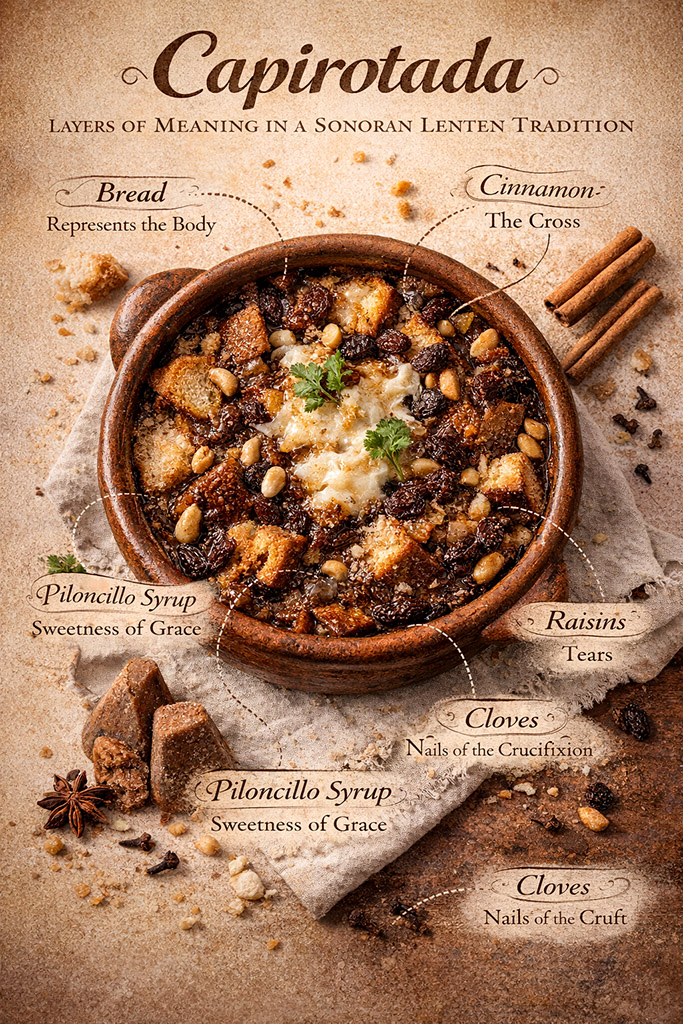
Capirotada
A Sonoran Lenten Tradition of Faith, Memory, and Family
In Sonora, Lent does not arrive quietly. It comes with aroma.
On Ash Wednesday and every Friday during Cuaresma, kitchens across the state fill with the warm scent of cinnamon, clove, anise, and melted piloncillo. It is the unmistakable fragrance of capirotada, a traditional Mexican bread pudding whose roots stretch back centuries and whose meaning goes far beyond dessert.
A Dish of Faith and Symbolism
Capirotada is traditionally prepared during Lent, the 40-day season leading to Easter in the Christian calendar. Historically, each ingredient carries symbolic meaning. The bread represents the Body of Christ, the piloncillo syrup symbolizes His blood, cloves recall the nails of the crucifixion, cinnamon sticks evoke the wooden cross, and melted cheese represents the Holy Shroud.
In Sonora, the dish evolved with regional flair. While variations exist across Mexico, some include peanuts, raisins, or even tomatoes and onion “colitis,” Sonoran capirotada often emphasizes a richly spiced syrup and a delicate balance between sweetness and warmth.
For many families, it is not just religious, it is emotional.
More Than Dessert
Capirotada in Sonora is not merely seasonal cuisine. It is an edible family archive, a bridge between generations, a ritual of faith, and a marker of identity.
Like many Sonoran traditions, it blends devotion with practicality, rural roots with urban evolution, and personal memory with collective experience.
When you taste capirotada in Sonora during Lent, you are not just tasting bread and syrup. You are tasting inheritance.