Sonora: A Land That Feeds the Soul
Sonora’s cuisine is shaped not by fashion, but by survival, geography, and heritage.
It is the food of desert and sea, of ranchers and fishermen, of Indigenous peoples and mission settlers, of innovation under an unforgiving sun. More than simply “Mexican food,” Sonoran cuisine is its own identity – bold, elemental, rooted in the land, and carried forward through generations who learned how to coax life, flavor, and abundance out of an austere landscape.
From the Sea of Cortez to the Sonoran Desert, the ingredients of this region tell a story of resilience.
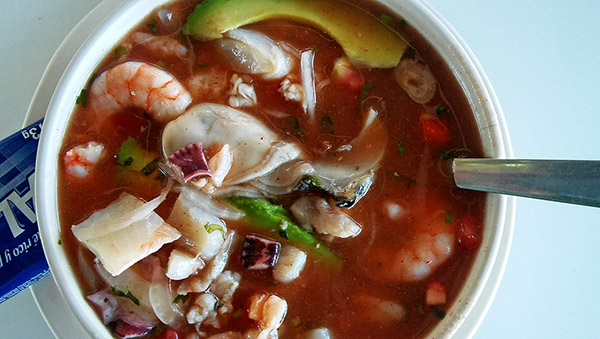
Here, coastal breezes and saltwater mingle with mesquite forests and cactus fruit. The Gulf provides shrimp, oysters, scallops, octopus, and fish that show up on family tables and street corners alike.
Inland, cattle ranching – introduced during the Spanish colonial era but perfected by Sonoran vaqueros – gave rise to one of the region’s most famous traditions: expertly grilled carne asada, still cooked over mesquite today in backyards, markets, and neighborhood gatherings.
But the story goes back much further than colonization.
Long before cattle and wheat arrived, Indigenous peoples such as the Comcaac (Seri), Yaqui, Mayo, Pima and Tohono O’odham mastered the land.
They understood timing, seasons, plants, and water in ways that modern society is just beginning to appreciate again. They harvested pitayas from towering saguaros before birds could reach the fruit. They collected tunas from prickly pear, ground mesquite beans into flour, and gathered native seeds, roots and herbs to sustain themselves across centuries of desert life.
Those traditions are woven into Sonoran cuisine to this day.
Fire and sun shape flavors here. You taste it in machaca, air-dried beef rehydrated and scrambled with eggs in the mornings. You taste it in gallina pinta, a rich stew of beans, corn and meat that simmers slowly, much like the stories told around it. You taste it in hand-pressed flour tortillas, a Sonoran signature so tender and delicate they almost fold under their own warmth – unmatched anywhere else in Mexico.
And then there are the sweets of Sonora: coyotas, filled with piloncillo and baked into soft, golden rounds; cactus jams, wild honey, and traditional atoles that echo centuries of desert adaptation and celebration.
Each region adds its own voice.
In towns like Caborca, Altar, and Magdalena de Kino, the food reflects ranching traditions and desert ingredients.
In Hermosillo, Sonora’s capital, modern life blends with classic flavors in markets and street stands.
In Kino Bay and Rocky Point, seafood reigns, prepared fresh and simply, honoring the catch rather than disguising it. In Ciudad Obregón and the Yaqui Valley, fields, rivers and Indigenous recipes shape everyday meals.
Sonoran cuisine is also a language of togetherness.
Food in Sonora is not hurried. Carne asada is not just a meal; it is a gathering. Tamales are made in groups, passed from hand to hand, story to story. The act of eating is an act of belonging.
To know Sonora, one must not just see the desert – one must taste it.
Visitors to the region are encouraged to step beyond the familiar and seek out the true flavors of Sonora: local markets instead of chains, family-owned restaurants instead of franchises, regional dishes instead of imported menus. Ask for what the land provides, and Sonora will answer.
Sonoran cuisine is not simply food. It is memory. It is geography. It is identity.
It is a living archive of the desert and the sea.
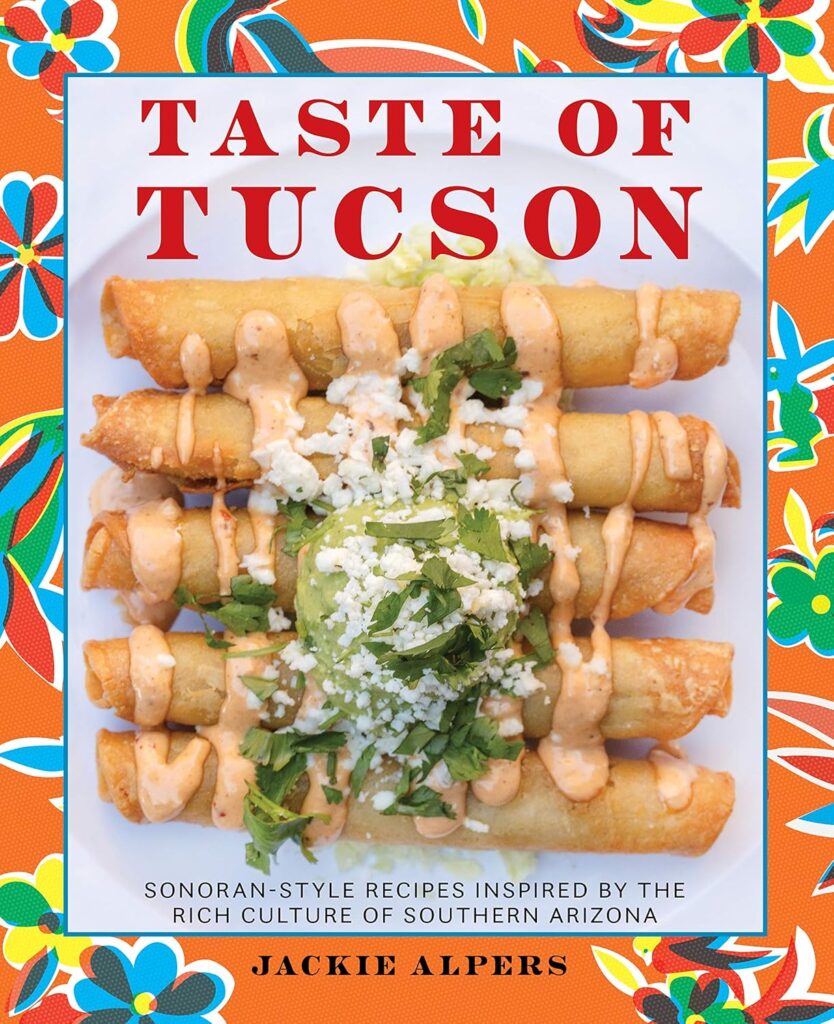


Books about Mexican Cuisine